Affordable RF Shielded Enclosures for Electronics Testing
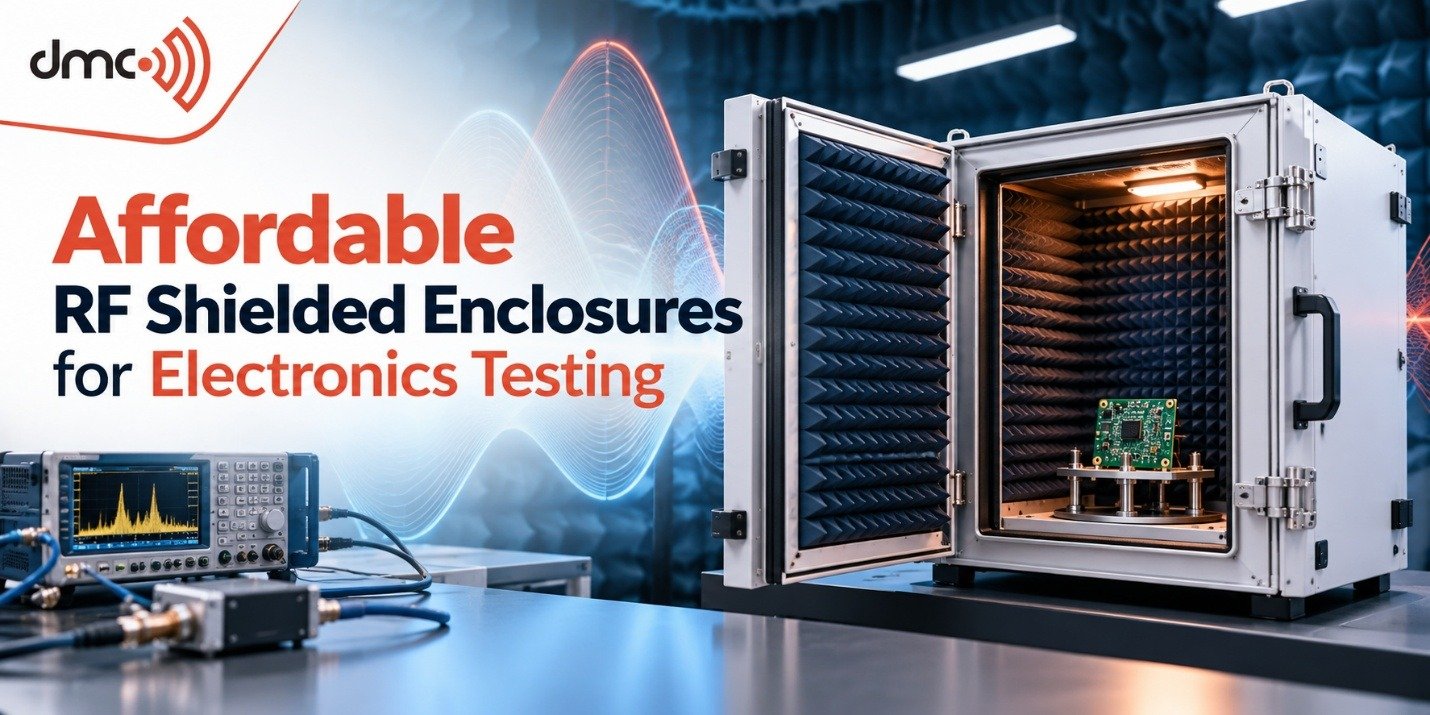
Table of Contents
- What Is an RF Shielded Enclosure?
- What Does “Affordable” Really Mean?
- How to Keep Costs Under Control
Electronics teams rarely lack ideas; they lack a quiet place to test them. Wi-Fi routers, mobile networks, broadcast towers and nearby machinery all fill the air with radio energy, and that energy can disturb sensitive measurements. An RF Shielded Enclosure gives engineers a controlled space where results depend on the device under test, not on what happens outside the lab.
Diamond Microwave Chambers Ltd (DMCRF) works with laboratories, product developers and research teams that need dependable RF shielding without paying for features they will never use. This guide explains what shielded enclosures do, what drives their cost, how the main types compare, and how to choose one sensibly so your testing stays accurate and your budget stays realistic.
What Is an RF Shielded Enclosure?
An RF shielded enclosure is a closed room, cabinet or box built with conductive walls that block radio-frequency energy from entering or leaving. Engineers use it to isolate a product from outside interference and to keep its own emissions from affecting nearby equipment.
Shielding is not the same as absorption. Shielding limits energy crossing the boundary of the enclosure. RF Absorbers, which are added in anechoic designs, reduce reflections inside. Many basic test needs only require shielding, which is often where savings begin.
Where Shielded Enclosures Are Used
Different industries rely on them for different reasons:
- Pre-compliance and EMC testing: Finding emission problems early, before formal certification.
- Wireless device testing: Checking Wi-Fi, Bluetooth, cellular and IoT modules without outside signals interfering.
- Component and PCB debugging: Isolating a noisy circuit during development.
- Research and education: Giving universities repeatable, low-noise conditions.
- Production testing: Screening finished units on a manufacturing line.
What Does “Affordable” Really Mean?
Affordable does not mean the lowest quotation. A cheap enclosure that fails to meet your required shielding level, or needs rework after installation, costs more than a correctly specified one. In practice, affordability means matching the enclosure to your actual test requirements and avoiding unnecessary extras.
Several factors influence price:
- Size: Larger volumes need more material, structure and installation time.
- Shielding effectiveness: Higher attenuation across a wider frequency range usually requires more demanding construction.
- Construction type: Modular panel systems, welded designs and bench-top boxes differ in cost and flexibility.
- Doors and seals: Door design strongly affects shielding performance and long-term reliability.
- Penetrations: Power filters, signal filters, waveguide vents and RF connectors add engineering and components.
- Absorbers: Adding absorber material turns a shielded room into an anechoic design and raises cost.
- Installation and verification: Site access, assembly and performance testing should be included in the budget.
Choosing the Right Enclosure Type
| Enclosure type | Typical use | Cost consideration | Main limitation |
|---|---|---|---|
| Bench-top shield box | Small devices, wireless modules, quick checks | Generally the lowest-cost option | Limited internal space |
| Modular shielded room | Laboratories and general electronics testing | Scales with floor area; can be expanded later | Needs suitable installation space |
| Custom shielded enclosure | Unusual size, access or interface needs | Higher engineering effort | Longer design and lead time |
| Shielded anechoic chamber | Antenna and RF immunity or radiated measurements | Absorbers add significant cost | Often more than basic testing needs |
These are general descriptions. The correct choice depends on your test method, frequency range and the standards relevant to your product.
What to Verify Before You Buy
A quotation is only useful if it can be checked. Ask each supplier for the following information so you can compare options fairly:
- Documented shielding performance: The frequency range and attenuation values the design is intended to achieve, and the test method used to confirm them.
- Verification plan: Whether performance testing is carried out after installation and what report you receive.
- Door and seal details: Maintenance needs and the expected replacement interval for contact surfaces.
- Interface components: Specifications for power line filters, signal filters and ventilation waveguides.
- Delivery and support: Lead time, installation scope, warranty terms and service availability.
Honest suppliers will describe both what an enclosure can do and where its limits lie. Be cautious of any claim that a single low-cost product suits every frequency and every standard.
How to Keep Costs Under Control
A sensible budget starts with clear requirements. These steps help avoid overspending:
- Define the test first. Decide what you will measure before choosing a design.
- Specify only the shielding you need. Ask what attenuation and frequency range your tests genuinely require.
- Choose modular construction where growth is likely. Panels can often be added or reconfigured later.
- Plan interfaces early. Listing cables, filters and connectors up front prevents costly changes.
- Compare complete quotations. Check that delivery, installation and verification are included.
- Consider lifetime cost. Door seals, maintenance and spare parts matter over many years.
Common Mistakes to Avoid
- Selecting an enclosure by price alone without a written specification.
- Ignoring the space needed for the device, test equipment and operator.
- Underestimating cable and filter requirements.
- Assuming a shielded enclosure is automatically an anechoic chamber.
- Skipping performance verification after installation.
- Forgetting ventilation, lighting and access for larger setups.
Pro Tip: Before requesting a quotation, write a one-page requirements sheet. Include the size of the largest device, frequency range, required shielding level, number of cables and connectors, available room dimensions and any future testing plans. A clear brief helps Diamond Microwave Chambers Ltd recommend an appropriate design and makes quotes from different suppliers easier to compare.
Get the Right Shielding for Your Budget
Affordable RF Shielding comes from good planning, not from cutting corners on performance. Define your tests, choose the simplest enclosure that meets them, and confirm performance through verification. Diamond Microwave Chambers Ltd helps teams explore RF shielded enclosure options suited to their electronics testing needs and project budget. Contact the team with your requirements to discuss a practical solution.
Leave a Reply