Which RF Absorber Is Best for EMI Testing?
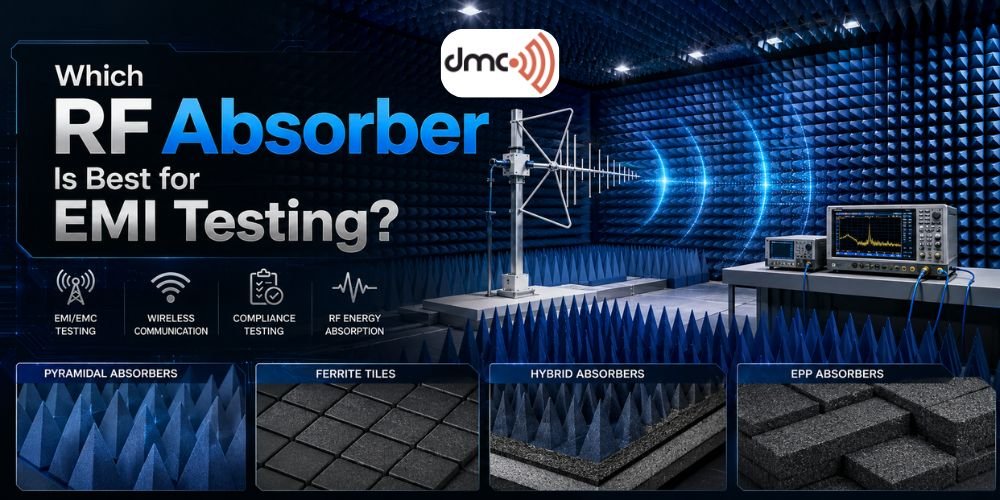
Table of Contents
- Why RF Absorbers Are Important in EMI Testing
- Types of RF Absorbers Used for EMI Testing
- Comparison of RF Absorber Types
- Why Hybrid RF Absorbers Are Often Considered the Best Choice
EMI testing is a critical process for ensuring electronic devices meet regulatory standards and perform reliably in real-world environments. One of the most important components in any EMI or EMC test facility is the RF absorber. Choosing the best RF absorber for EMI testing directly impacts measurement accuracy, chamber performance, and compliance results. At DMC Shop, we provide a wide range of RF absorber solutions designed for EMC chambers, anechoic chambers, RF shielded rooms, and antenna measurement facilities.
Understanding the different absorber technologies available can help engineers select the right solution for their testing requirements.
Why RF Absorbers Are Important in EMI Testing
RF absorbers are specialized materials designed to absorb electromagnetic energy and minimize reflections inside testing environments. During EMI testing, unwanted reflections can distort measurements and produce inaccurate results.
RF absorbers help by:
- Reducing electromagnetic reflections
- Creating a free-space testing environment
- Improving measurement accuracy
- Enhancing EMC chamber performance
- Supporting international compliance standards
- Increasing repeatability of test results
Without proper RF absorbers, EMI testing results may not accurately represent the actual electromagnetic behavior of the device under test.
What Is an RF Absorber?
An RF absorber is a material engineered to absorb radio frequency and microwave energy rather than reflecting it. These absorbers are commonly installed on chamber walls, ceilings, and floors to suppress electromagnetic reflections.
RF absorbers are widely used in:
- EMC test chambers
- Anechoic chambers
- Antenna measurement facilities
- Radar cross-section testing
- Wireless device testing
- Automotive EMC laboratories
- Aerospace and defense applications
The effectiveness of an RF absorber depends on its material composition, geometry, frequency range, and installation method.
Types of RF Absorbers Used for EMI Testing
Several types of RF absorbers are available, each designed for specific frequency ranges and testing applications.
1. Pyramidal RF Absorbers
Pyramidal absorbers are among the most commonly used absorbers in EMI and EMC testing facilities.
Features:
- Polyurethane foam construction
- Carbon-loaded material
- Excellent high-frequency absorption
- Lightweight design
- Easy installation
Benefits:
- Superior performance above 500 MHz
- Ideal for antenna measurements
- Effective in microwave applications
- Available in various heights
Applications:
- Semi-anechoic chambers
- Fully anechoic chambers
- OTA testing facilities
2. Ferrite Tile Absorbers
Ferrite absorbers are designed to provide excellent low-frequency absorption performance.
Features:
- Ceramic ferrite material
- High magnetic permeability
- Durable structure
- Long operational lifespan
Benefits:
- Effective from 30 MHz to 1 GHz
- Ideal for EMC compliance testing
- Excellent low-frequency performance
- Consistent absorption characteristics
Applications:
- EMC compliance chambers
- CISPR testing facilities
- Automotive EMC testing
3. Hybrid RF Absorbers
Hybrid absorbers combine ferrite tiles and pyramidal absorbers to achieve broad frequency coverage.
Features:
- Ferrite tile base
- Foam absorber layer
- Wideband performance
- Optimized chamber design
Benefits:
- Broad frequency coverage
- Improved chamber efficiency
- Excellent reflectivity performance
- Reduced chamber size requirements
Applications:
- EMC chambers
- 3m and 10m test facilities
- Military EMC testing
4. EPP RF Absorbers
Expanded Polypropylene (EPP) absorbers are becoming increasingly popular due to their durability and environmental advantages.
Features:
- Lightweight construction
- High durability
- Moisture resistance
- Long service life
Benefits:
- Reduced maintenance costs
- Better structural stability
- Sustainable material
- Improved lifespan compared to conventional foam
Applications:
- EMC testing facilities
- Aerospace testing
- Industrial RF environments
Comparison of RF Absorber Types
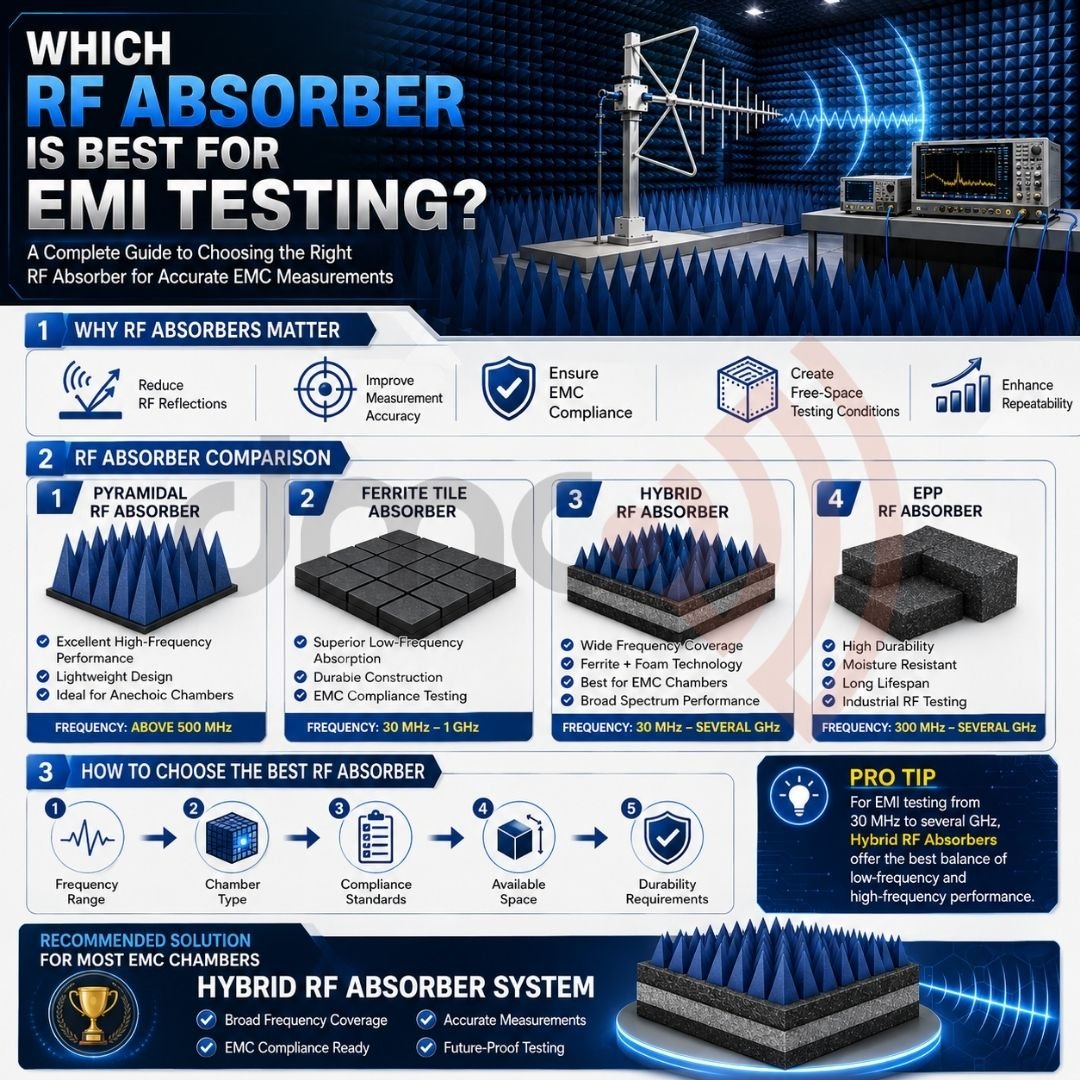
| RF Absorber Type | Frequency Range | Key Advantage | Best Application |
|---|---|---|---|
| Pyramidal Absorber | Above 500 MHz | Excellent high-frequency absorption | Anechoic Chambers |
| Ferrite Tile Absorber | 30 MHz – 1 GHz | Superior low-frequency performance | EMC Compliance Testing |
| Hybrid Absorber | Broad Frequency Range | Wideband coverage | EMC Chambers |
| EPP RF Absorber | Broad Frequency Range | Long lifespan and durability | Industrial Testing Facilities |
How to Choose the Best RF Absorber for EMI Testing
Selecting the right absorber depends on multiple technical factors.
Frequency Range Requirements
The first consideration is the frequency range of your testing application.
Questions to ask:
- Are you testing below 1 GHz?
- Do you require mmWave testing?
- Is wideband performance needed?
For low-frequency EMC testing, ferrite absorbers often provide the best results. For high-frequency applications, pyramidal absorbers are generally preferred.
Chamber Type
Different chamber designs require different absorber technologies.
Examples:
- Semi-anechoic chambers often use hybrid absorbers
- Fully anechoic chambers use pyramidal absorbers
- EMC compliance chambers commonly use ferrite and hybrid systems
Selecting absorbers based on chamber design helps maximize testing performance.
Compliance Standards
Many industries must comply with strict EMC regulations.
Common standards include:
- FCC
- CE
- CISPR
- IEC
- MIL-STD
The absorber system should support the required testing standards and chamber validation requirements.
Available Space
Chamber dimensions significantly impact absorber selection.
Consider:
- Chamber size
- Available wall space
- Ceiling height
- Equipment placement
Hybrid absorbers can provide broad frequency coverage while minimizing chamber size requirements.
Long-Term Durability
Durability is often overlooked when selecting RF absorbers.
Factors affecting lifespan include:
- Humidity
- Temperature fluctuations
- Mechanical stress
- Environmental exposure
EPP RF absorbers offer excellent durability and lower maintenance requirements over time.
Why Hybrid RF Absorbers Are Often Considered the Best Choice
For many EMC testing applications, hybrid absorbers provide the ideal balance between low-frequency and high-frequency performance.
Advantages include:
- Broad frequency coverage
- Improved reflectivity performance
- Compliance with EMC standards
- Efficient chamber utilization
- Reliable testing results
Because EMI testing often covers a wide frequency spectrum, hybrid absorber systems are commonly used in modern EMC chambers.
Industries That Depend on RF Absorbers
RF absorbers play a critical role across numerous industries.
Automotive
Used for:
- EV testing
- ADAS validation
- Vehicle EMC compliance
Aerospace and Defense
Used for:
- Radar testing
- Communication systems
- Electronic warfare equipment
Telecommunications
Used for:
- 5G testing
- Base station validation
- OTA measurements
Consumer Electronics
Used for:
- Smartphone testing
- Wireless device certification
- EMC compliance verification
Medical Devices
Used for:
- Electromagnetic compatibility testing
- Regulatory compliance
- Device reliability assessments
Pro Tip
If your EMI testing covers frequencies from 30 MHz to several GHz, a Hybrid RF Absorber system combining Ferrite Tiles and Pyramidal Absorbers typically provides the best overall performance. This configuration delivers excellent low-frequency absorption while maintaining superior high-frequency reflectivity control, making it the preferred solution for modern EMC chambers.
Conclusion
The answer to Which RF Absorber Is Best for EMI Testing? depends on your frequency range, chamber design, testing standards, and long-term performance requirements. Ferrite absorbers excel at low frequencies, pyramidal absorbers dominate high-frequency applications, and EPP absorbers offer enhanced durability. However, for most EMC and EMI testing facilities, hybrid RF absorbers provide the best combination of wideband performance, compliance support, and measurement accuracy.
By selecting the right RF absorber system from DMC Shop , organizations can improve testing reliability, achieve regulatory compliance, and ensure superior electromagnetic performance for their products.
Leave a Reply