What Is the Cost of an RF Anechoic Chamber?
Table of Contents
- Understanding RF Anechoic Chamber Pricing
- Chamber Size and Its Impact on Cost
- Installation and Site Preparation Costs
RF anechoic chambers are specialized testing environments designed to eliminate electromagnetic interference and unwanted radio frequency reflections. These chambers play a critical role in industries such as telecommunications, aerospace, defense, automotive, electronics, and wireless device manufacturing. Whether you are conducting EMC compliance testing, antenna measurements, OTA testing, or RF performance evaluations, investing in a high-quality RF anechoic chamber is essential.
In this guide, DMC Shop explains the key factors affecting RF anechoic chamber pricing and helps businesses understand what influences the total investment.
Understanding RF Anechoic Chamber Pricing
The cost of an RF anechoic chamber varies significantly based on project specifications. Small research chambers may cost substantially less than large compliance testing facilities designed for automotive or aerospace applications.
Most RF anechoic chamber projects are custom-engineered solutions rather than off-the-shelf products. Because every testing requirement differs, chamber pricing is usually determined after evaluating technical specifications and testing objectives.
Organizations should consider not only the chamber itself but also supporting infrastructure, installation, calibration, and long-term maintenance requirements.
Typical Cost Factors Include:
- Chamber dimensions
- Frequency range requirements
- RF absorber performance
- Shielding effectiveness
- Compliance standards
- Ventilation systems
- Power filtering systems
- Turntables and positioning systems
- Antenna measurement equipment
- Installation complexity
These elements collectively influence the final project cost.
RF Anechoic Chamber Cost by Chamber Type
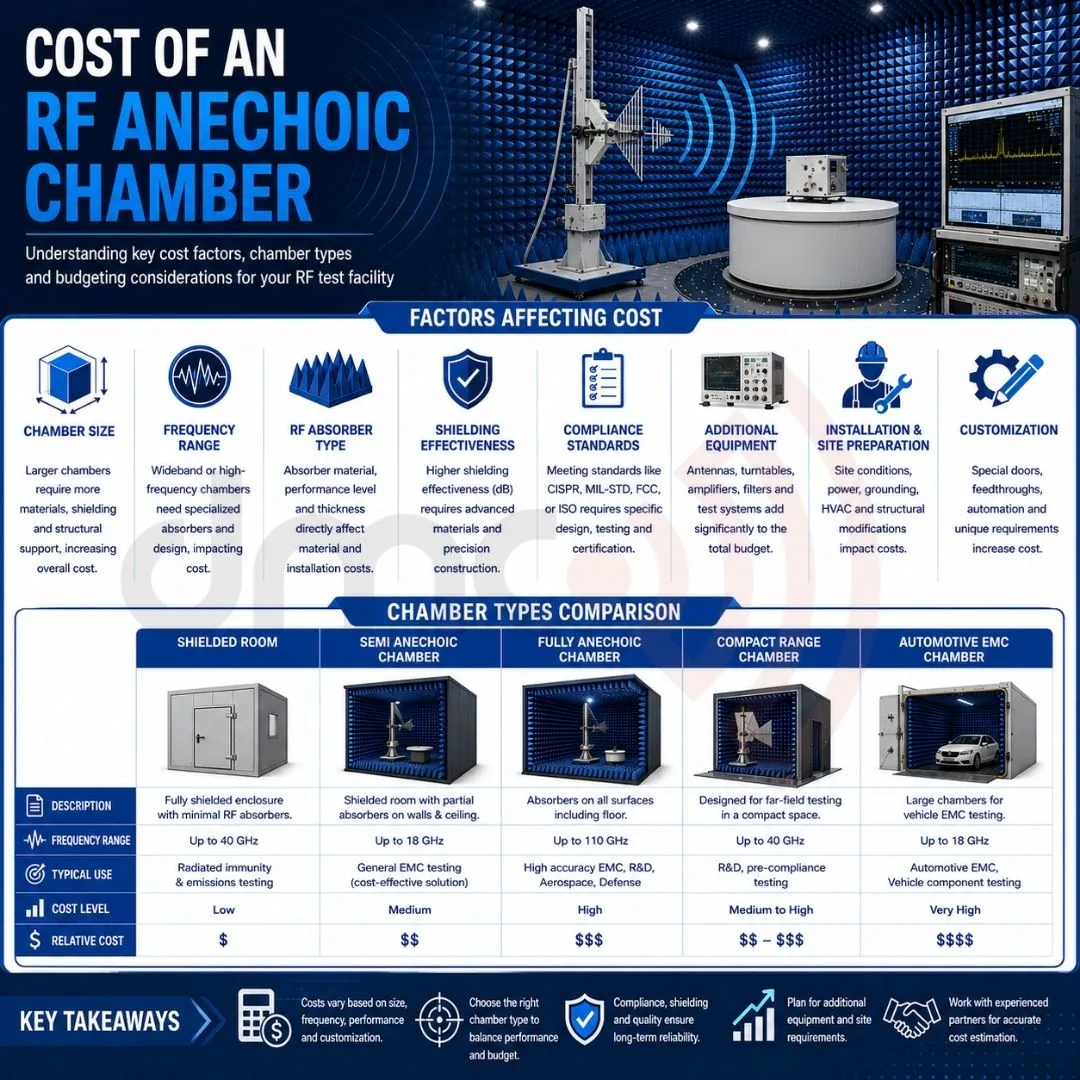
Different chamber types are designed for specific testing applications. The level of absorber coverage and performance directly impacts pricing.
| Chamber Type | Typical Application | Relative Cost |
|---|---|---|
| Shielded Room | Basic RF Isolation | Low |
| Semi Anechoic Chamber | EMC Compliance Testing | Medium |
| Fully Anechoic Chamber | Antenna & OTA Testing | High |
| Compact Range Chamber | Radar Testing | Very High |
| Automotive EMC Chamber | Vehicle Testing | Premium |
| Aerospace RF Chamber | Defense & Aerospace Applications | Premium |
Fully anechoic chambers generally require absorber coverage on all walls, floors, and ceilings, resulting in higher material and installation costs compared to semi-anechoic designs.
Chamber Size and Its Impact on Cost
One of the biggest cost drivers is chamber size.
A larger chamber requires:
- More RF shielding material
- Additional absorbers
- Greater structural support
- Larger HVAC systems
- Increased installation labor
- Enhanced power filtering
For example, a chamber designed to test handheld devices requires significantly less space than a facility intended for automotive EMC testing.
As chamber dimensions increase, overall project costs rise due to the additional materials and engineering involved.
Common Chamber Sizes:
- Small R&D Chambers
- Antenna Measurement Chambers
- EMC Compliance Chambers
- Automotive Test Chambers
- Aerospace Test Facilities
Choosing the correct chamber size helps optimize both performance and budget.
RF Absorber Selection and Pricing
RF absorbers are among the most critical and expensive components of an anechoic chamber.
These materials absorb electromagnetic waves and prevent signal reflections that could affect measurement accuracy.
The type of absorber used influences chamber performance and cost.
Common RF Absorber Types
- Pyramidal absorbers
- Hybrid absorbers
- Ferrite tile absorbers
- Broadband absorbers
- High-frequency absorbers
Higher-performance absorbers designed for wide frequency coverage typically increase overall chamber costs. Testing facilities operating at microwave and millimeter-wave frequencies often require premium absorber solutions.
Organizations should select absorbers based on their testing requirements rather than choosing the highest specification unnecessarily.
Shielding Requirements and Cost Considerations
RF shielding forms the foundation of every anechoic chamber.
The shielding system prevents external electromagnetic interference from entering the chamber and ensures accurate testing conditions.
Several factors affect shielding costs:
- Shielding effectiveness requirements
- Construction materials
- Door design
- Penetration panels
- Waveguide systems
- Power filters
- Fiber optic interfaces
Facilities performing compliance testing often require stringent shielding performance, which can increase project costs.
Proper shielding ensures reliable measurements and long-term testing accuracy.
Compliance Standards Influence Pricing
Industry standards significantly impact RF anechoic chamber design and cost.
Testing facilities may need compliance with standards such as:
- CISPR
- IEC
- ANSI
- FCC
- MIL-STD
- RTCA
- Automotive OEM specifications
Meeting these standards often requires advanced chamber validation, specialized absorber layouts, and precision engineering.
As compliance requirements become more demanding, overall project investment typically increases.
Additional Equipment Costs
An RF anechoic chamber project involves more than just the chamber structure.
Organizations often require supporting equipment such as:
- Antenna positioning systems
- Turntables
- RF measurement instruments
- Signal generators
- Spectrum analyzers
- Network analyzers
- Control software
- Data acquisition systems
These components contribute significantly to the overall project budget.
When planning an RF testing facility, it is important to evaluate both chamber and equipment costs together.
Installation and Site Preparation Costs
Installation is another major factor affecting RF anechoic chamber pricing.
Before installation begins, facilities may require:
- Floor reinforcement
- Electrical upgrades
- HVAC modifications
- Building preparation
- Transportation logistics
- Safety systems
Installation costs depend on chamber size, location, and project complexity.
Large facilities often require extensive planning and specialized engineering support to ensure successful deployment.
Long-Term Maintenance and Operational Costs
Organizations should also consider the long-term cost of ownership.
Regular maintenance helps maintain chamber performance and extend equipment lifespan.
Typical maintenance activities include:
- Chamber inspections
- RF absorber evaluation
- Shield integrity testing
- Door maintenance
- Filter replacement
- Calibration services
Investing in preventive maintenance reduces downtime and protects the chamber's testing accuracy over time.
Benefits of Investing in a High-Quality RF Anechoic Chamber
Although an RF anechoic chamber represents a significant investment, it delivers substantial long-term value.
Key benefits include:
- Accurate RF measurements
- Reliable EMC compliance testing
- Improved product quality
- Faster certification processes
- Reduced testing errors
- Enhanced research capabilities
- Increased customer confidence
- Future-ready testing infrastructure
A well-designed chamber can support testing requirements for many years while delivering consistent performance.
Pro Tip: Focus on Total Lifecycle Cost, Not Just Initial Price
Many organizations compare RF anechoic chambers based solely on upfront costs. However, the best investment is often the solution that provides long-term reliability, compliance readiness, and lower maintenance expenses. Choosing high-quality absorbers, robust shielding systems, and future-proof chamber designs can significantly reduce operational costs over the chamber's lifespan.
Why Choose DMC Shop for RF Anechoic Chambers?
DMC Shop provides advanced RF anechoic chamber solutions personalized to a wide range of industries. From EMC compliance testing facilities to antenna measurement chambers and customized RF environments, our team delivers solutions designed for accuracy, reliability, and long-term performance.
Our expertise includes:
- Custom RF chamber design
- Semi-anechoic chambers
- Fully anechoic chambers
- EMC testing chambers
- Antenna measurement chambers
- Automotive EMC facilities
- Defense and aerospace RF chambers
- Chamber validation and support
Whether you are planning a new testing facility or upgrading an existing laboratory, DMC Shop can help identify the most suitable chamber solution for your technical and budget requirements.
Conclusion
The cost of an RF anechoic chamber depends on numerous factors, including chamber size, absorber selection, shielding requirements, compliance standards, and additional testing equipment. Every project is unique, making customized design and engineering essential for achieving optimal performance and value.
Organizations should evaluate not only initial investment costs but also long-term operational benefits, maintenance requirements, and future testing needs. By partnering with an experienced provider like DMC Shop, businesses can ensure they receive a chamber solution that delivers accurate results, regulatory compliance, and long-term reliability.
Leave a Reply