Get the Best RF Shielded Enclosures for Your Lab
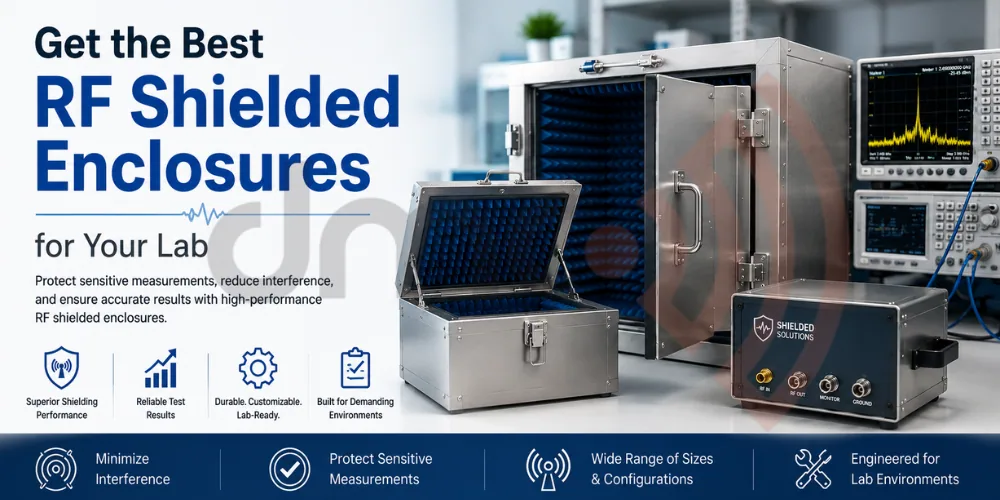
Table of Contents
- What Are RF Absorbers?
- Why RF Absorbers Are Important
- Important Factors to Consider When Choosing the Correct RF Absorber
- Application Areas of RF Absorbers
Enclosures with RF Shielding technology have become indispensable for today's laboratories due to the necessity to verify and validate EM devices. The telecommunications industry, aircraft sector, military organizations, electronics manufacturers, automotive sector, and even biomed companies rely heavily on RF Shielding enclosures to test their products in isolation.
In line with the evolution in wireless communication technology, there is an increasing demand for reliable RF shielding solutions. For instance, laboratories involved in testing of 5G products, internet of things products, radars, and high-frequency electronics must have a shielded test chamber.However, picking the right RF shielding enclosures can prove to be quite challenging for beginners. Different enclosure types, different shielding materials, varying performance levels, and other factors will be taken into account prior to purchase.
This resource contains all the information you will require regarding RF shielded enclosures, such as the enclosure type, performance level, applications, materials used, and purchasing tips.
What are RF Shielded Enclosures?
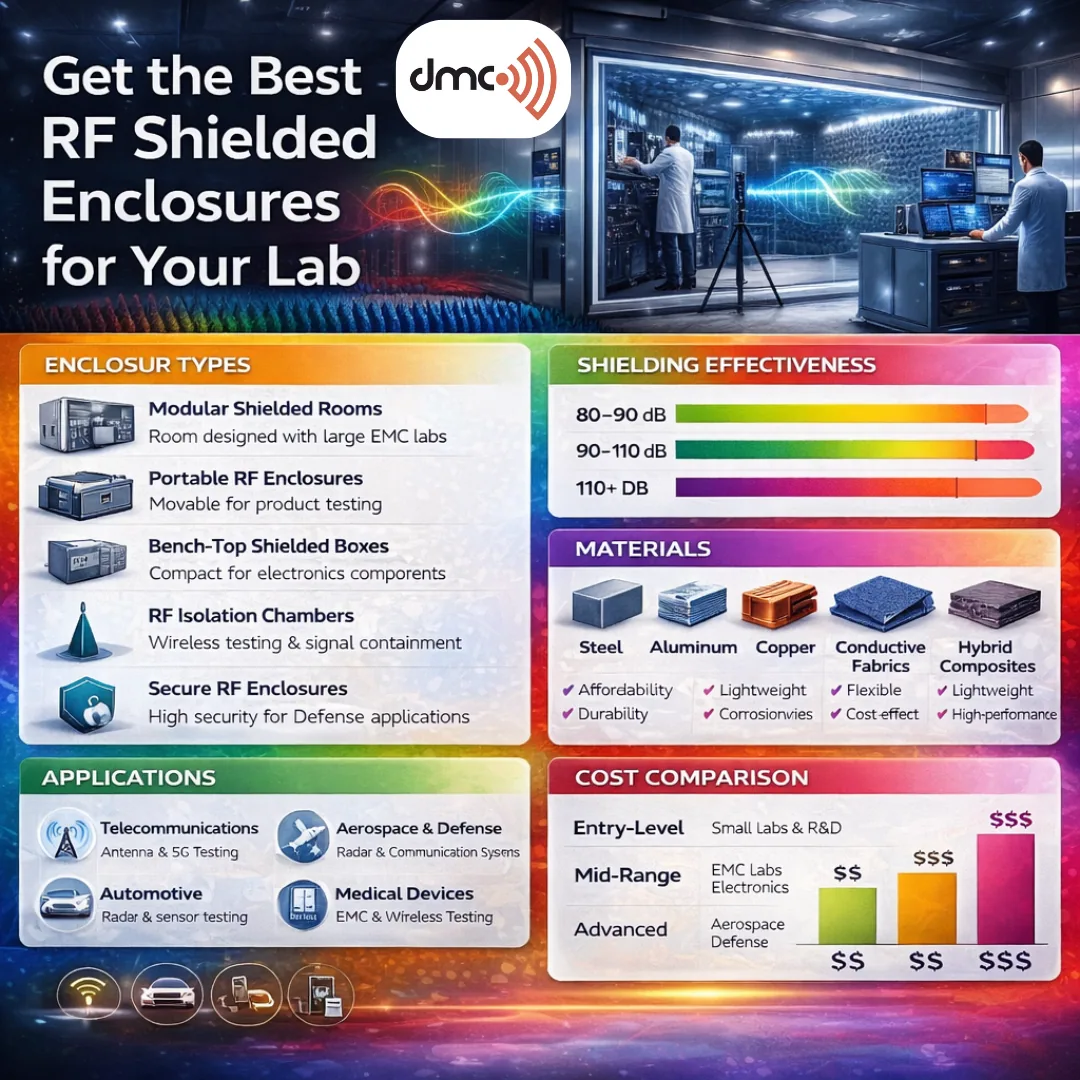
An RF shielded enclosure refers to a unique structure that prevents the entry and exit of electromagnetic waves within the testing environment. The enclosure is made from conductive materials like steel, aluminum, copper, among others.
Applications of RF Shielding Boxes
- EMC/EMI Testing
- Wireless communication testing
- Antennas testing
- Secure communication testing
- Medical devices testing
- Application in aerospace and defense industry
- Development of electronic products
By utilizing RF shielded enclosures, researchers can accurately test their products without getting interfered by any sort of electromagnetic interference from the outside environment.
Why RF Shielding is Important?
EMI might affect the functioning of sensitive electronic devices and testing systems. In live laboratory environment, other communication systems, industrial equipment, and wireless networks might interfere with testing process.
Benefits of RF Shielding
- Prevention of interference from EMI
- Creation of signal isolation
- Increased accuracy in testing
- Conformity with EMC standards
- Safety of electronic gadgets
- Adequate testing environment for wireless gadget
In light of the emergence of new technologies such as 5G, WiFi 6, self-driving cars, and Internet of Things, it becomes paramount to stress the significance of effective shielding.
Things to Take into Account Before Buying
1. Shielding Efficiency
This criterion refers to the ability of an enclosure to shield from electromagnetic radiation. The degree of shielding efficiency can be measured in decibels (dB).
Some features that can make a shielding enclosure suitable include:
- High shielding efficiency within the range of 80 to 120 dB
- The frequency of operation
- Minimal signal leakage
The enclosure should have a relatively high shielding efficiency to guarantee proper signal isolation and accurate tests.
2. Frequency Range Compatibility
Various shielding materials have varying levels of effectiveness at various frequency ranges.
In testing in low-frequency environments, one might require:
- More conductive material
- More effective seam sealing
- Magnetic shielding
High frequencies might call for:
- Signal absorption
- Conductive panels
- Shielding filters
Make sure that the enclosure will operate within the range of your working frequencies.
3. The Size and Design of an Enclosure
An appropriate enclosure must have space for:
- Instrumentation
- Staff
- Cabling
- Ventilation
- Further growth
Laboratories tend to underestimate the future test needs. It is preferable to select a bigger RF shielded enclosure than expected.
4. The Sealing System
One of the major weaknesses of an enclosure is its door. RF shielding can be accomplished through using:
- Conductive gaskets
- Knife-edge seals
- Pneumatic seals
- Finger stock contacts
Sealing systems are necessary to guarantee RF isolation.
5. Ventilation and Power Lines
Generally speaking, a shielded enclosure comprises the following components:
- Shielded Ventilation
- Waveguide Honeycombs
- Filtered Power Lines
Such elements ensure proper air circulation and equipment operation while maintaining RF shielding ability.
Common Applications of RF Shielded Enclosures
Electromagnetic Compatibility and Interference Testing
EMC testing facilities employ a shielded test enclosure when measuring compatibility of electronic devices.
Telecommunications
Telecommunications
Telecommunication companies may need RF isolation chambers to perform tests such as:
- 5G testing
- Antenna measurements
- Signal analysis
- Device certification
Aerospace and Defense
Military and aerospace uses need effective shielding from RF to meet demands of:
- Communication
- Radar tests
- Electronic warfare
- Satellite technology
Testing Medical Devices
- Testing and validation of medical devices requires safe operation free from any electromagnetic interference.
- RF shielded enclosures are useful for research and development of various electronics products and high frequency electronics.
- RF Shielding Materials Used
Material selection plays an important role in determining the effectiveness, durability, and cost of shielding.
Material selection plays an important role in determining the effectiveness, durability, and cost of shielding.
Materials usually used for RF shielding include:
- Steel
- Aluminum
- Copper
- Conductive fabric
- Hybrid composite materials
Copper shielding provides good RF shielding but is more expensive as compared to others. Steel is used extensively due to its effectiveness and durability at a cost-effective price point.
RF Shielding Enclosures Budget
Factors affecting the cost of shielding enclosures are:
- Size of enclosure
- Effectiveness of shielding
- Quality of material
- Frequency range of shielding
Entry Level Systems
For use in:
- Laboratories for education purposes
- Testing of electronic components
- Piloting of products
Mid Range Systems
Useful for:
- EMC laboratories
- Telecommunication companies
- R&D laboratories of industries
High End Systems
Used in:
- The aerospace industry
- Military applications
- Secure communication systems
Apart from the cost of acquisition, other expenses include those of installation, maintenance, and upgrading.
Tips for RF Shielded Enclosures
Tips for RF Shielded Enclosures: Purchase those that are certified as being effective and upgradeable with future wireless test technologies.
- Frequent Mistakes First Time Purchasers Commit
- Choosing on Basis of Price Alone
- Cheap RF shielded enclosures may compromise the quality and durability of your enclosure.
- Ignoring Ventilation Requirements
- If there is inadequate ventilation, overheating is likely to happen and eventually ruin the enclosure.
- Estimating Future Needs Inaccurately
- Innovations occur rapidly within the field of wireless testing and communications technologies.
- Neglecting Compliance Requirements
- It is important to ensure that the enclosure meets all EMC and other specifications.
- Selecting the Wrong Frequency Range
- Different shielding systems perform differently across frequency bands.
Before buying RF shielded enclosures, ask suppliers:
- What shielding effectiveness is guaranteed?
- What range of frequencies can the product handle?
- Is there any form of shielding certification included with it?
- What are the material requirements?
- Is custom sizing an option?
- What type of maintenance is required?
- Are there upgrade options for the future?
A good manufacturer will provide you with engineering details.
Trends in RF Shielding Technology
The world of RF shielding is always evolving along with advancements in wireless technology.
Some of the upcoming trends are:
- 5G and mm-wave shielding capabilities
- Multi-modular solutions
- Smart RF monitoring technology
- Composite lightweight materials
- Automation and testing integration
- Sustainable manufacturing approaches
Businesses that opt to purchase RF shielded enclosures at present should plan ahead and think about future-proofing.
RF shielded enclosures are crucial when it comes to accurate and reliable electromagnetic testing and signal shielding. Selecting an appropriate RF shielding option requires one to consider several factors, including but not limited to effectiveness, size, materials, ventilation system, and more.
There is a variety of considerations that will dictate which type of RF shielded enclosure is best suited for your laboratory, including the purpose of the enclosure, the frequency range, and budget. In this instance, performance will need to be prioritized over cost concerns.
The use of the proper RF shielded enclosure ensures accurate measurements by reducing electromagnetic interference.
Leave a Reply