How to Select RF Shielding for Your Facility
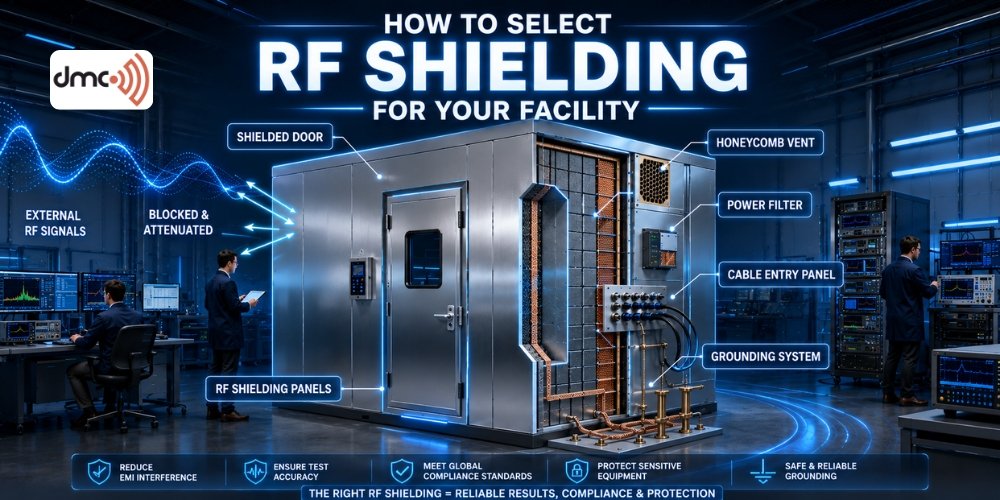
Table of Contents
- Why RF Shielding Matters
- Key Factors to Consider Before Selecting RF Shielding
- Important Components of an RF Shielded Facility
Wireless technologies, electromagnetic compatibility (EMC) testing, secure communications, and advanced electronics all depend on reliable RF shielding. Whether you're building a new EMC laboratory, upgrading an existing test facility, or protecting sensitive equipment from electromagnetic interference (EMI), understanding How to Select RF Shielding for Your Facility is essential.
Choosing the right shielding solution isn't simply about blocking radio signals. Factors such as shielding effectiveness, facility size, testing standards, operating frequency, ventilation, accessibility, and future expansion all play a major role in determining the best solution.
At DMC Shop, we provide high-quality RF shielding products and engineered solutions designed for research laboratories, defense organizations, aerospace manufacturers, telecom companies, automotive industries, medical facilities, and educational institutions. This guide explains everything you need to know before selecting RF shielding for your facility.
Why RF Shielding Matters
Electronic equipment continuously emits electromagnetic energy. External RF signals can interfere with precision instruments, while internal devices may radiate unwanted emissions into surrounding environments.
RF shielding creates an isolated environment that significantly reduces electromagnetic interference.
Common benefits include:
- Improved measurement accuracy
- Reliable EMC testing
- Protection of sensitive electronics
- Secure communication environments
- Compliance with international standards
- Reduced signal leakage
- Better repeatability of RF measurements
- Lower testing uncertainties
Without proper RF shielding, even advanced testing equipment may produce inconsistent or inaccurate results.
Understanding RF Shielding
RF shielding refers to conductive barriers designed to prevent electromagnetic waves from entering or leaving a protected environment.
These barriers may consist of:
- Steel panels
- Copper panels
- Aluminum structures
- Conductive fabrics
- Honeycomb ventilation panels
- RF shielded doors
- Shielded windows
- Conductive gaskets
- Shielded cable penetrations
When properly integrated, these components create a highly controlled RF environment suitable for demanding applications.
Key Factors to Consider Before Selecting RF Shielding
Choosing RF shielding requires evaluating both current operational needs and future requirements.
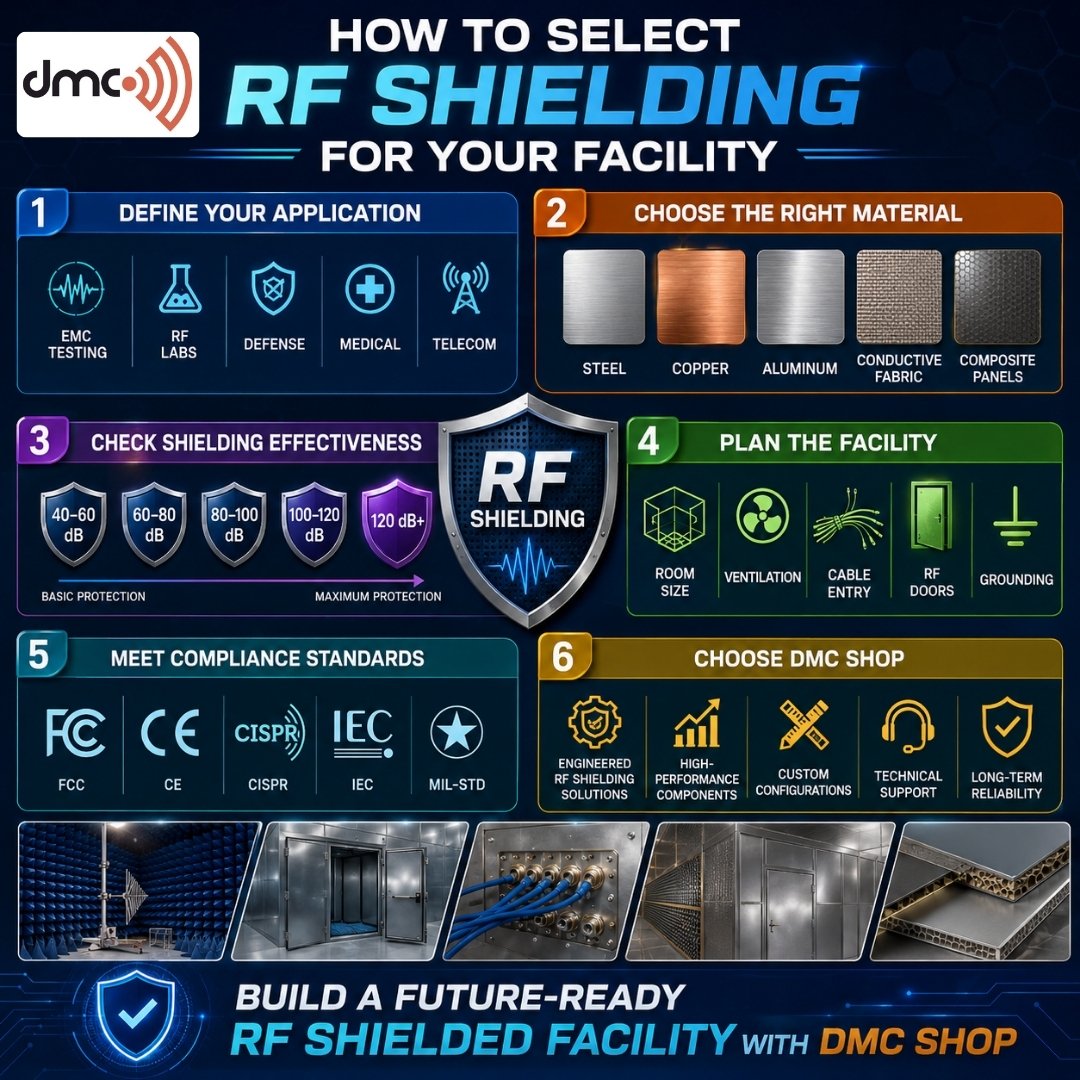
1. Identify Your Application
Different industries require different shielding performance.
Examples include:
- EMC compliance testing
- Antenna measurements
- Defense communication systems
- Medical equipment testing
- Wireless device validation
- Satellite communication
- Automotive electronics
- Research laboratories
- Semiconductor manufacturing
Understanding the intended application helps determine the required shielding effectiveness and chamber configuration.
2. Frequency Range
Not every shielding system performs equally across all frequencies.
Questions to consider include:
- Will testing involve HF?
- VHF?
- UHF?
- Microwave frequencies?
- Millimeter-wave applications?
Higher frequencies typically demand more precise construction techniques and higher-quality shielding materials.
3. Required Shielding Effectiveness
Shielding effectiveness is generally measured in decibels (dB).
Typical requirements include:
| Application | Typical Shielding Effectiveness |
|---|---|
| Office Equipment | 40–60 dB |
| Medical Electronics | 60–80 dB |
| EMC Pre-Compliance | 80–100 dB |
| Compliance Testing | 100–120 dB |
| Military Applications | 120 dB+ |
Selecting higher shielding than necessary may increase costs unnecessarily, while insufficient shielding can lead to failed testing.
4. Room Size
Facility dimensions directly influence shielding design.
Consider:
- Equipment footprint
- Operator workspace
- Cable routing
- Ventilation
- Maintenance access
- Future expansion
A well-designed shielded room should accommodate both present and future testing needs.
5. Shielding Material
Different materials offer different advantages.
| Material | Advantages | Best Applications |
|---|---|---|
| Steel | Durable and Economical | EMC Laboratories |
| Copper | Excellent Conductivity | High-Performance RF Rooms |
| Aluminum | Lightweight | Portable Shielding |
| Conductive Fabric | Flexible Installation | Temporary RF Shielding |
| Composite Panels | Balanced Performance | Modern RF Facilities |
Material selection depends on environmental conditions, budget, and performance expectations.
Important Components of an RF Shielded Facility
An effective RF shielded room includes much more than metal walls.
Key components include:
- RF shielded doors
- Shielded windows
- Waveguide air vents
- Honeycomb ventilation panels
- Power line filters
- Signal filters
- Cable entry panels
- RF gaskets
- Grounding systems
- Interior RF absorbers (where required)
Each component contributes to maintaining overall shielding integrity.
Ventilation and Cooling
Many facilities overlook HVAC integration during RF shielding design.
Proper ventilation should:
- Maintain shielding effectiveness
- Ensure operator comfort
- Prevent equipment overheating
- Reduce maintenance issues
- Support continuous operation
Honeycomb RF vents are commonly used because they allow airflow while minimizing RF leakage.
Cable Penetration Planning
Every cable entering a shielded room creates a potential leakage path.
Plan for:
- Fiber optic connections
- Ethernet
- RF coaxial cables
- Power cables
- Control wiring
- Data acquisition systems
Special RF filters and shielded penetration panels help preserve shielding performance.
Compliance Standards
Before purchasing RF shielding, verify the standards your facility must satisfy.
Common standards include:
- IEEE
- IEC
- CISPR
- MIL-STD
- FCC
- CE
- ISO automotive EMC standards
Compliance requirements influence shielding performance specifications and room construction methods.
Maintenance Requirements
High-quality RF shielding provides years of reliable performance with routine maintenance.
Maintenance should include:
- Door seal inspection
- Gasket replacement
- Filter inspection
- Ground continuity testing
- Visual panel inspection
- Shielding effectiveness verification
Preventive maintenance minimizes unexpected downtime.
Cost vs Long-Term Value
Lowest initial cost does not always provide the best value.
Consider:
- Installation quality
- Product lifespan
- Maintenance costs
- Expansion capability
- Compliance requirements
- Downtime risks
Investing in a reliable shielding system often reduces operating costs over the life of the facility.
Pro Tip
Plan for future technologies when designing your RF shielded facility. As wireless systems evolve toward higher frequencies such as 5G Advanced, 6G, satellite communications, and next-generation radar, selecting a shielding solution with additional performance margin today can reduce expensive upgrades in the future.
Conclusion
Selecting the right RF shielding solution involves much more than choosing metal panels. You must evaluate frequency range, shielding effectiveness, facility layout, ventilation, compliance requirements, maintenance, and future scalability.
A properly engineered RF shielded facility improves testing accuracy, protects sensitive equipment, ensures regulatory compliance, and provides long-term operational reliability.
At DMC Shop, we offer premium RF shielding products and engineered solutions that help organizations build dependable RF testing environments. Whether you're designing a new laboratory or upgrading an existing facility, investing in quality RF shielding is an investment in accurate, repeatable, and future-ready performance.
Leave a Reply