Looking to Buy RF Anechoic Chambers? Start Here
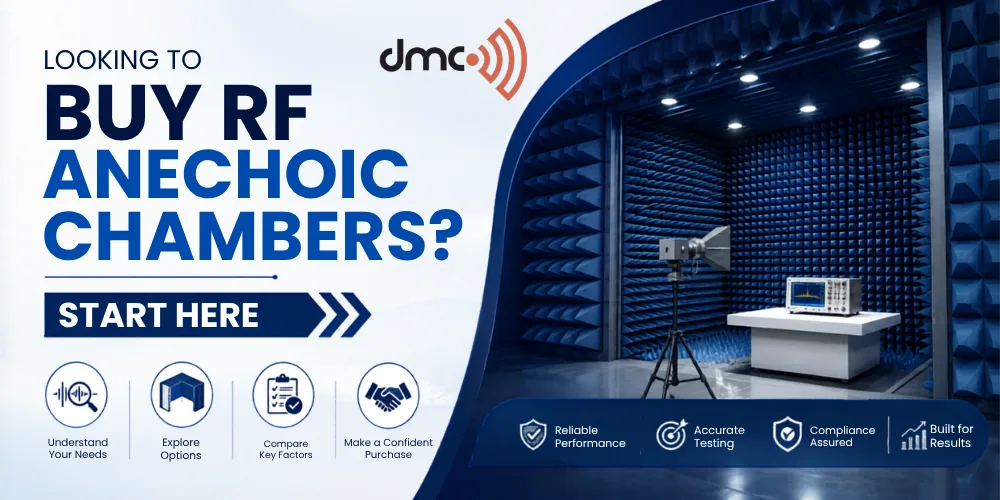
Table of Contents
- What Is an RF Anechoic Chamber?
- Why RF Anechoic Chambers Matter
- Common Applications of RF Anechoic Chambers
- Choosing Based Only on Price
RF anechoic chambers are essential testing environments used across industries such as telecommunications, aerospace, automotive, defense, electronics, and wireless technology. These specially designed chambers create controlled electromagnetic environments where engineers can perform accurate RF measurements without external interference or signal reflections.
For first-time buyers, purchasing an RF anechoic chamber can feel overwhelming. Different chamber types, absorber materials, shielding levels, frequency requirements, and installation considerations all play a major role in selecting the right system. Investing in the wrong chamber can lead to inaccurate testing, compliance failures, and expensive modifications later.
This guide explains everything beginners need to know before buying an RF anechoic chamber. From understanding chamber types to evaluating performance specifications, this article will help you make an informed purchasing decision.
What Is an RF Anechoic Chamber?
An RF anechoic chamber is a shielded enclosure designed to absorb electromagnetic waves and eliminate unwanted reflections. These chambers simulate free-space conditions, allowing engineers to test antennas, wireless devices, radar systems, and electronic equipment with high accuracy.
The walls, ceiling, and floor are typically lined with RF absorbers that prevent electromagnetic waves from bouncing back into the testing area. Combined with metal shielding, the chamber blocks outside interference and creates a stable testing environment.
RF anechoic chambers are commonly used for:
- Antenna measurements
- EMC and EMI compliance testing
- Radar cross-section testing
- Wireless communication testing
- Automotive electronics validation
- Satellite and aerospace testing
- 5G and IoT device development
Why RF Anechoic Chambers Matter
Modern electronic devices operate in increasingly crowded electromagnetic environments. Without proper testing conditions, engineers cannot accurately measure signal performance or ensure compliance with industry regulations.
RF anechoic chambers help:
- Improve testing accuracy
- Eliminate electromagnetic interference
- Ensure regulatory compliance
- Simulate real-world wireless conditions
- Validate antenna performance
- Reduce costly product failures
As technologies like 5G, autonomous vehicles, and IoT continue to expand, demand for reliable RF testing environments is growing rapidly.
Key Factors to Consider Before Buying
1. Frequency Requirements
Frequency range is one of the most important considerations when selecting an RF anechoic chamber.
Low-frequency testing typically requires:
- Ferrite tile absorbers
- Larger chamber dimensions
- Enhanced shielding performance
High-frequency applications may use:
- Foam absorbers
- Compact chamber designs
- Precision antenna positioning systems
Always verify the chamber's certified operating frequency range before purchasing.
2. Chamber Size
The size of the chamber depends on:
- Equipment dimensions
- Testing distance requirements
- Antenna size
- Future scalability
Larger chambers allow more flexible testing but increase installation and operational costs.
Buyers should also account for:
- Door access
- Cable routing
- Ventilation systems
- Operator workspace
Choosing a chamber that is too small can limit future testing capabilities.
3. Shielding Effectiveness
Shielding performance determines how well the chamber blocks external electromagnetic interference.
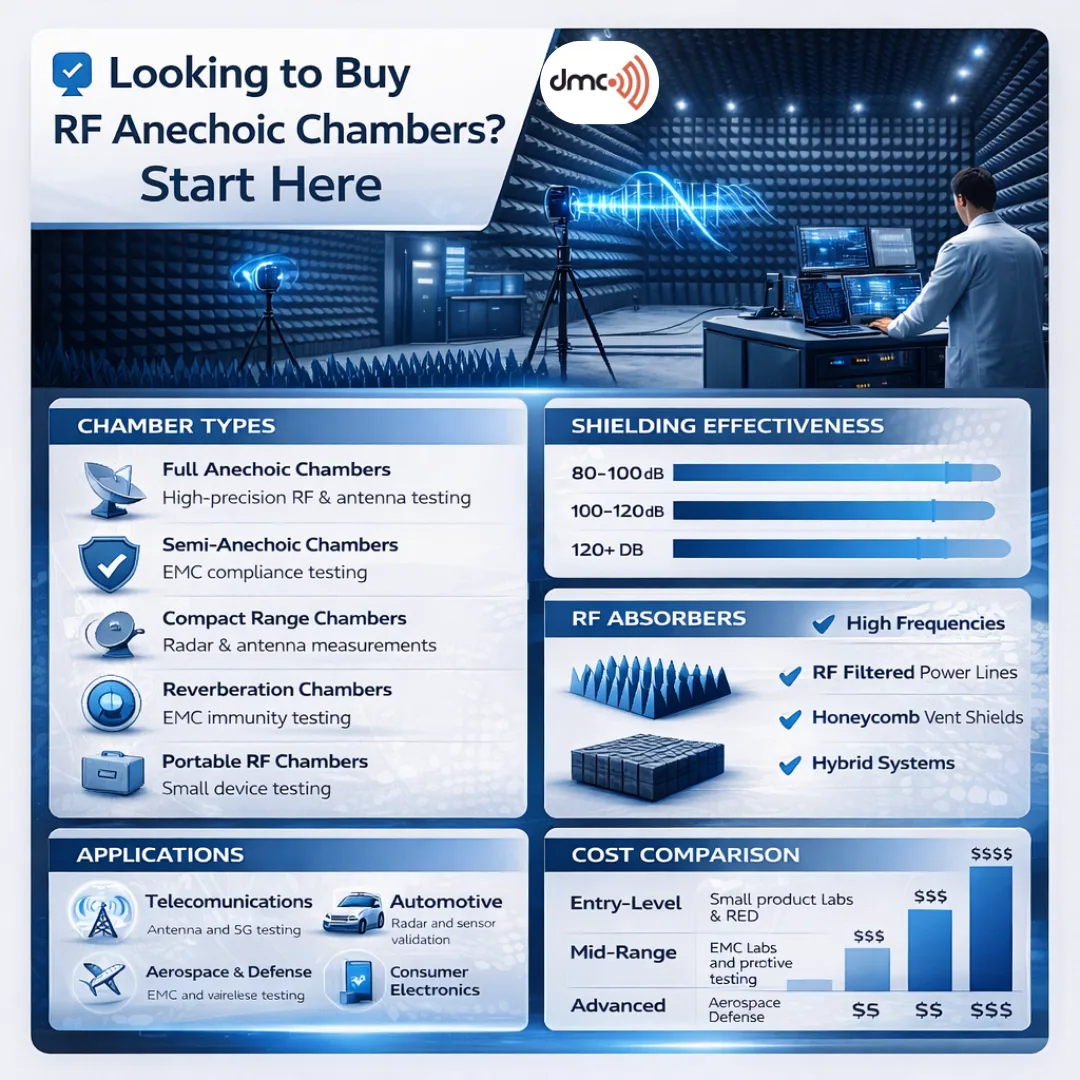
High-quality chambers often provide shielding effectiveness above 100 dB across specified frequency ranges.
Key shielding considerations include:
- Door sealing systems
- Power line filters
- Ventilation waveguides
- Shielded cable penetrations
Poor shielding can compromise testing accuracy and compliance results.
4. RF Absorber Performance
RF absorbers are responsible for reducing signal reflections inside the chamber.
Common absorber materials include:
- Pyramidal foam absorbers
- Ferrite tile absorbers
- Hybrid absorber systems
The absorber type directly affects:
- Frequency coverage
- Reflectivity performance
- Chamber size requirements
- Cost
Hybrid absorber systems are often preferred because they combine low-frequency and high-frequency performance.
5. Compliance Standards
Different industries require chambers that meet specific testing standards.
Common standards include:
- CISPR
- IEC
- MIL-STD
- ANSI
- FCC compliance requirements
Before purchasing, confirm the chamber supports the certifications and standards relevant to your industry.
Common Applications of RF Anechoic Chambers
Telecommunications
Wireless communication companies use RF anechoic chambers for:
- Antenna testing
- 5G validation
- Signal performance analysis
- Device certification
Automotive Industry
Modern vehicles contain radar systems, sensors, GPS modules, and wireless connectivity that require EMC and RF testing.
Aerospace and Defense
Military and aerospace applications use high-performance chambers for:
- Radar testing
- Satellite communication systems
- Stealth technology development
- Electronic warfare testing
Consumer Electronics
Manufacturers test smartphones, laptops, routers, and smart devices inside RF chambers to ensure reliable wireless performance.
Budget Planning for RF Anechoic Chambers
RF anechoic chambers are major investments, and costs vary significantly depending on chamber size, shielding level, and absorber performance.
Entry-Level Chambers
Suitable for:
- Small product testing
- Educational institutions
- R&D labs
Mid-Range Chambers
Ideal for:
- EMC compliance testing
- Automotive suppliers
- Telecommunications labs
Advanced Chambers
Required for:
- Aerospace programs
- Military applications
- Large-scale antenna testing
In addition to chamber costs, buyers should budget for:
- Installation
- Calibration
- Maintenance
- HVAC systems
- Power filtering equipment
Pro Tip
Pro Tip: Always plan for future testing needs when purchasing an RF anechoic chamber. Choosing a slightly larger chamber with broader frequency coverage can save substantial upgrade costs later.
Mistakes First-Time Buyers Should Avoid
Choosing Based Only on Price
Lower-cost chambers may compromise shielding quality or absorber performance.
Ignoring Installation Requirements
RF chambers often require specialized construction, grounding, and HVAC planning.
Overlooking Maintenance Needs
Absorbers and shielding components require periodic inspection and maintenance.
Underestimating Future Expansion
Technology requirements evolve quickly, especially in wireless communication industries.
Skipping Certification Verification
Always request documented performance validation and shielding test reports.
Questions to Ask Suppliers Before Buying
Before finalizing your purchase, ask suppliers:
- What shielding effectiveness is guaranteed?
- Which frequency ranges are supported?
- Are compliance certifications included?
- What installation support is available?
- How often is maintenance required?
- Can the chamber be expanded later?
- What absorber materials are used?
Reliable suppliers should provide detailed technical documentation and engineering support.
Future Trends in RF Anechoic Chambers
The RF testing industry continues evolving as new wireless technologies emerge.
Key trends include:
- 5G and 6G testing expansion
- Compact modular chamber designs
- Automated testing systems
- AI-assisted RF measurements
- Millimeter-wave optimization
- Sustainable chamber materials
Businesses investing in RF anechoic chambers today should consider future technology compatibility.
Buying an RF anechoic chamber is a significant investment that directly impacts testing quality, product reliability, and regulatory compliance. Understanding chamber types, absorber systems, shielding effectiveness, and application requirements is essential for making the right decision.
The best chamber for your organization depends on your testing goals, frequency requirements, available space, and future scalability needs. Instead of focusing only on upfront costs, prioritize long-term performance, technical support, and certified compliance capabilities.
With the right RF anechoic chamber, organizations can achieve accurate testing results, improve wireless system performance, and confidently meet industry standards in a rapidly evolving technological landscape.
Leave a Reply