RF Testing Equipment for Sale – Full Guide
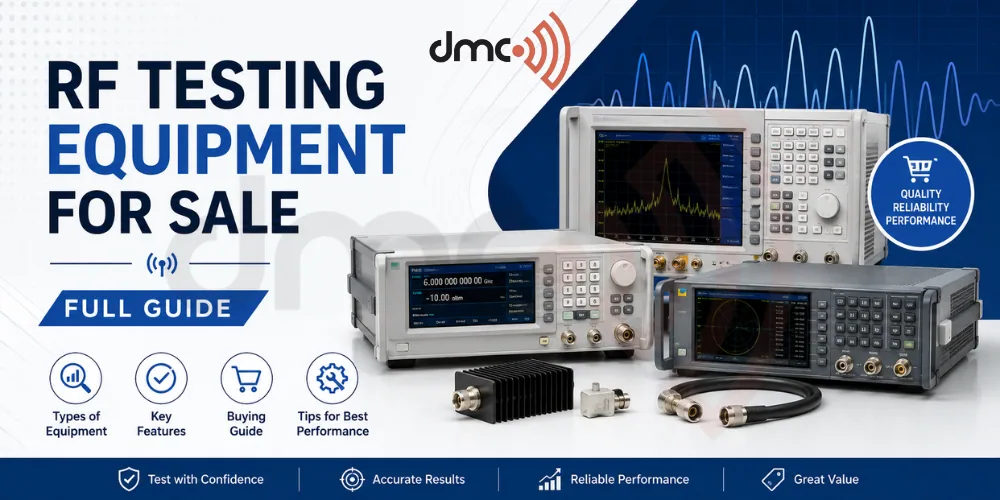
Table of Contents
- What is RF Testing Equipment?
- Common Types of RF Testing Equipment
- Features to Look for When Buying RF Testing Equipment
- Common Challenges in RF Testing
As the world continues to become more connected and technology continues to change how we communicate, electrification and wireless technologies have also started to be used in various fields of telecommunications, aerospace, defense, automotive, technology and manufacturing. Wireless devices are becoming more advanced every day, thus creating a greater need for high-quality RF testing equipment for sale.
In order to ensure that equipment operates as intended, adheres to specifications and continues to operate at a high level of performance, engineers, manufacturers and laboratories must depend upon high-quality test systems.
If you design or build antennas, IoT devices, radar, satellite/wireless equipment, etc., then you will want to invest the necessary money in appropriate RF testing equipment to ensure that your products meet both accuracy and reliability requirements.
This comprehensive buying guide outlines everything you need to know about buying RF testing equipment, including what types of RF testing equipment exist; specific uses; how to evaluate which equipment best suits your needs; as well as other useful advice on improving the speed and quality of your testing.
What is RF Testing Equipment?
RF Testing Equipment is equipment used to measure and evaluate the performance of electromagnetic signals within the RF frequency range. RF test equipment provides engineers with a means of the evaluating performance of wireless communications systems, antennas and other components in stable conditions. This tech also handles various frequency ranges and latest methods, making it really useful for different testing needs.
- Wi-Fi, Bluetooth
- cellular networks
- 5G, satellite comm
- radar apps
- aerospace sys
- military comm
all need RF testing. This ensures they work right and meet standards too.
Why is RF testing equipment important?
Wireless products work in really crowded electromagnetic spaces nowadays. Even tiny signal problems can cause major issues like poor performance or interference.
The use of professional RF measurement equipment provides many advantages over traditional methods.
- Professional RF measurement equipment will assist with accurate characterization of the signal, increasing the overall reliability of the product.
- In addition, professional RF measurement equipment will reduce development time and increase regulatory compliance.
- Professional RF measurement equipment will also reduce design errors and provide better validation of wireless performance.
- Testing done through professional RF measurement equipment will improve overall quality control at the manufacturing level.
Common Types of RF Testing Equipment
Several categories of equipment are used in RF testing environments.
| Equipment Type | Primary Function | Typical Application |
|---|---|---|
| Spectrum Analyzer | Signal analysis | Frequency monitoring |
| Vector Network Analyzer | Component characterization | Antenna testing |
| Signal Generator | RF signal creation | Device simulation |
| Power Meter | Power measurement | Transmitter testing |
| EMC Testing Equipment | Interference analysis | Compliance testing |
| Antenna Testing Equipment | Radiation measurement | Antenna validation |
| RF Test Chambers | Controlled testing environment | OTA testing |
| Oscilloscopes | Signal visualization | RF troubleshooting |
Each solution serves a unique role within a complete RF testing workflow.
Applications of RF Testing Equipment
The market for RF Testing Equipment serves lots of industries.
Telecommunications
They can also be used to test whether or not the networking equipment or antennas are functioning correctly.
Automotive Industry
The use of technology such as GPS and Bluetooth is required for connected vehicles. Therefore, the use of RF testing is also important for confirming the proper operation of these devices.
Aerospace / Defense Industries
Military communication, radar, satellite communication, and navigation systems all require thorough RF testing.
Consumer Electronics
The devices tested are smartphones, tablets, wearables, routers, as well as IoT devices before being released to consumers.
Research and Development
Research and development facilities or universities will also utilize high-end RF equipment when creating new technologies or concepts.
What is an RF Test Chamber?
The RF test chamber is a critical component of the RF testing environment. They provide a secluded electromagnetic environment (or an environment free from electromagnetic interference) with which to perform RF tests on devices.
The benefits are several-fold:
- You receive predictable, and therefore, accurate results.
- The noise level in the test chamber decreases significantly; thus, this contributes to more accurate RF measurements.
- It makes testing wireless devices much better and ensures they meet all requirements easily.
This gear is super important for stuff like antenna measurements and Over-The-Air tests.
Features to Look for When Buying RF Testing Equipment
Before buying RF testing gear, look at these things.
Frequency Range
Make sure it handles your current and future needs for frequency range.
Measurement Accuracy
Also, check its measurement accuracy, as it helps spot problems and boosts trust in your results.
Flexibility
Consider selecting solutions that allow you to keep up with upcoming technology needs as well as provide additional capacity for more testing in the future.
Compliance Assurance
Equipment will provide an avenue to assist you with adhering to both industry standards and certification requirements.
Software Integration
Many modern RF test systems come equipped with high-level software that enables automation, reporting, and analysis of the test data.
Calibration Maintenance
Ongoing calibration provides you with a consistent means of measurement over time, which increases reliability.
How RF Testing Equipment Improves Product Development
RF test efficiency will dramatically benefit the product development process for manufacturers by allowing them to:
- Find design flaws early
- Optimize performance of their antennas
- Reduce costs associated with testing
- Speed up the certification process
- Improve product quality
Using effective RF testing solutions will enable teams to obtain significant information prior to entering mass production.
Emerging Trends in RF Testing
The RF testing industry is continually changing with the growth of wireless technologies — this includes;
5G and Beyond
The sophisticated testing capability required for the operation of higher frequency and more advanced communication protocols.
OTA Testing Growth
As Over-The-Air testing has become necessary in the validation of wireless devices.
Automated Testing
Automation not only decreases the time taken to complete testing, but it also increases the overall consistency of results obtained from testing.
Artificial Intelligence Integration
With AI driven analytics, testing engineers are able to more quickly determine performance issues with their devices.
Advanced Antenna Validation
As new antenna technologies are on the rise, there will be an increasing demand for more precise measurement methods for evaluating performance.
Due to these trends, there will be an increased demand for next generation RF measurement equipment around the world.
Common Challenges in RF Testing
Organizations continue to encounter multiple testing obstacles as a result of advances in technology.
These obstacles include:
- Signal Interference
- Complex Wireless Protocols
- High-Frequency Measurement Requirements
- Compliance Verification
- Consistency of Test Environments
By selecting appropriate RF chamber equipment and testing systems, these challenges can be minimized lastingly.
Pro Tip
When looking for RF testing equipment available, look at systems with support for future frequency types, or new wireless standards. Investing in scalable solutions can save on upgrading down the line and extend the life of the equipment bought today.
Choosing the Right RF Testing Partner
It's not just how good the product is, but how good the company's provider is that can affect your success. Look for a partner who offers:
- Engineering Expertise
- Custom RF Chamber Solutions
- Installation Support
- Calibration Services
- Technical Consulting
- Long-Term Maintenance
Selecting an experienced RF Testing specialist will increase chances of success and enhance performance.
As wireless technologies continue developing, there is an increasing need for RF Testing Equipment for Sale. Accurate RF testing ensures product quality, compliance and performance. There are various RF Testing Systems, RF Measuring Equipment, Antenna Testing Equipment and RF Test Chambers that allow your organization to use today's testing needs and prepare for tomorrow's technological opportunities. Investing in reliable RF Testing Solutions will improve your efficiency, shorten your development cycle, and provide a superior wireless product when introduced into the marketplace.
Leave a Reply